
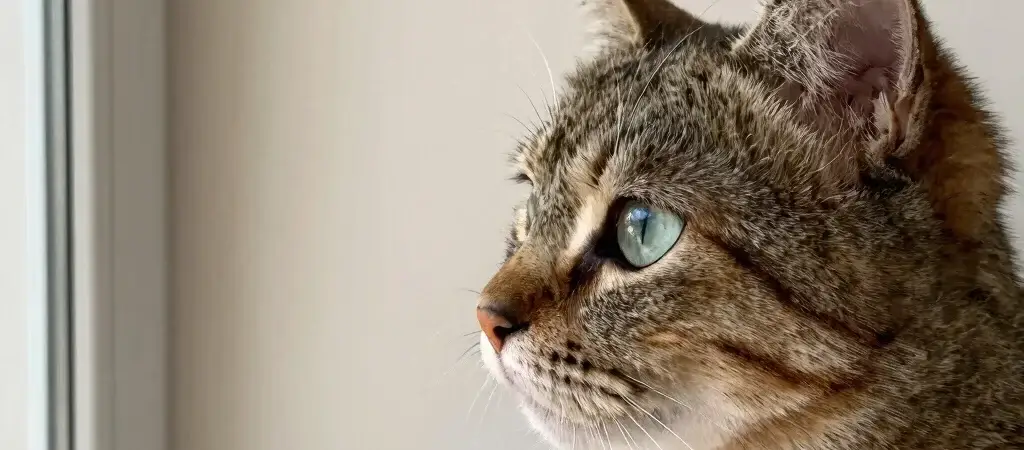
A cat slips through a dim hallway, pauses beside a chair, and seems to notice its edge before making contact. Whiskers help make sense of close surroundings, but they are not tiny measuring tapes that can promise every gap is safe. Their real job is subtler—and wonderfully useful.
Sensitive roots, not decoration
Whiskers, also called vibrissae, are specialized hairs set in follicles with many sensory connections. A cat can pick up contact and subtle movement around them, including changes in air currents near an object. That extra input helps when exploring close quarters or navigating in low light.
More than the muzzle
The most familiar whiskers fan out from the cheeks, but cats also have sensory whiskers above the eyes, around the chin, and on the backs of the front legs. Those different placements provide information from more than one angle. The whiskers above the eyes, for example, can respond when something brushes near the face.
Watch a cat investigate a box or reach under a sofa and you may see those whiskers angle forward. That movement is part of a bigger picture that includes sight, hearing, and touch. It is better to think of whiskers as useful sensors than as a built-in ruler for deciding whether a cat fits through an opening.
Give whiskers a little respect
Never trim a cat’s whiskers for appearance or convenience. Cutting them removes sensory hairs the cat uses to gather information, even though the whiskers will eventually grow back. If one falls out on its own, that is different; avoid pulling or tugging at the remaining ones.
The next time your cat studies a narrow gap, notice the small forward sweep of those whiskers. It is a reminder that cats explore with more than their eyes—and that one of their most recognizable features is doing quiet, practical work.