
We brought Walter home believing we were giving a tired old cat a quiet, comfortable place to spend his final days. His shelter paperwork carried two heavy words that made our hearts ache: HOSPICE FOSTER.
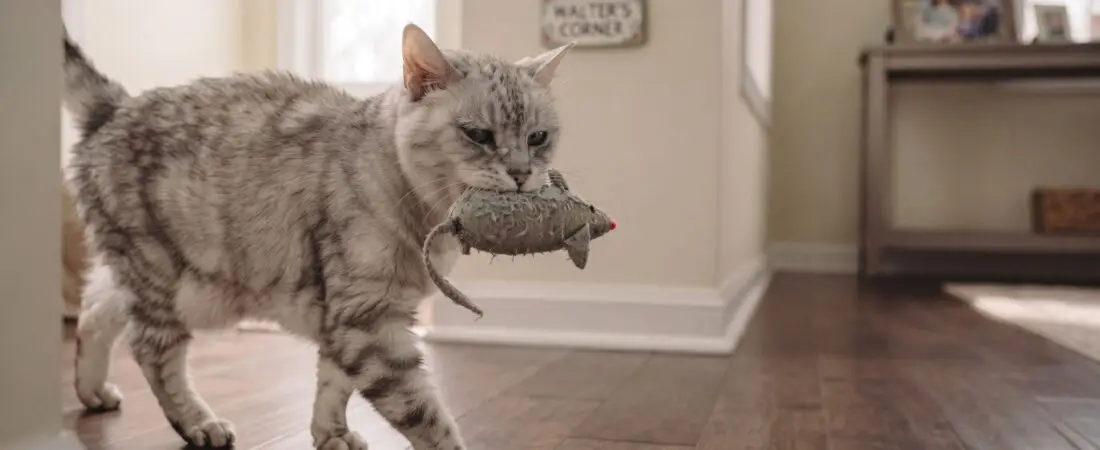
Three weeks later, that same elderly tomcat was proudly marching through our hallway with a battered stuffed mouse between his teeth. Watching him carry his prize around the house, we began to wonder if he hadn’t stopped living because his body had given up—perhaps he had simply stopped believing anyone wanted him around.
When the county shelter reached out to us, they didn’t promise a miracle or spin a dramatic tale. They simply explained that he was an older cat who needed a peaceful spot with someone willing to make his remaining time comfortable.
My wife and I exchanged a quiet look and didn’t need much convincing. We had plenty of room, plenty of time, and a house that had felt a little too quiet for far too long.
Meeting Fifteen-Year-Old Walter
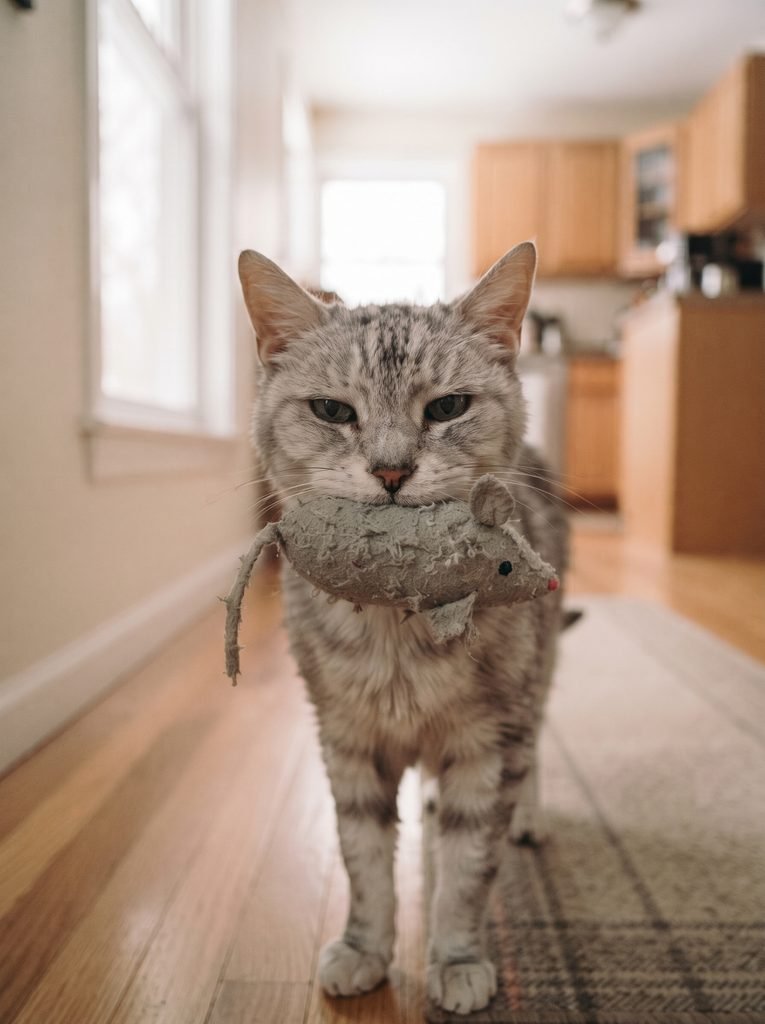
His name was Walter, and he was fifteen years old. He was a large, elderly tomcat with silver fur dusting his muzzle, cloudy eyes, and the unmistakable look of a cat who had seen many seasons come and go.
His steps were slow and stiff, with every movement taking careful thought as his tired hips carried his weight. His shelter notes weren’t exactly hopeful: “Low energy,” “Rarely stands,” and “Owner surrender.”
Seeing an entire life summed up in a few short lines felt sad enough on its own. Then at the bottom of the page, someone had written in bold letters: HOSPICE FOSTER.
So we got ready for what we thought would be a gentle goodbye. We laid down extra rugs over the slick hardwood floors, set up a supportive orthopedic cat bed away from drafts, kept the TV low, and tried to keep mornings calm and unhurried.
We didn’t expect bursts of energy or playful antics from him. We just wanted him to feel safe, warm, and loved for however long he had left—though Walter clearly had other ideas.
Week One: Deep, Quiet Rest
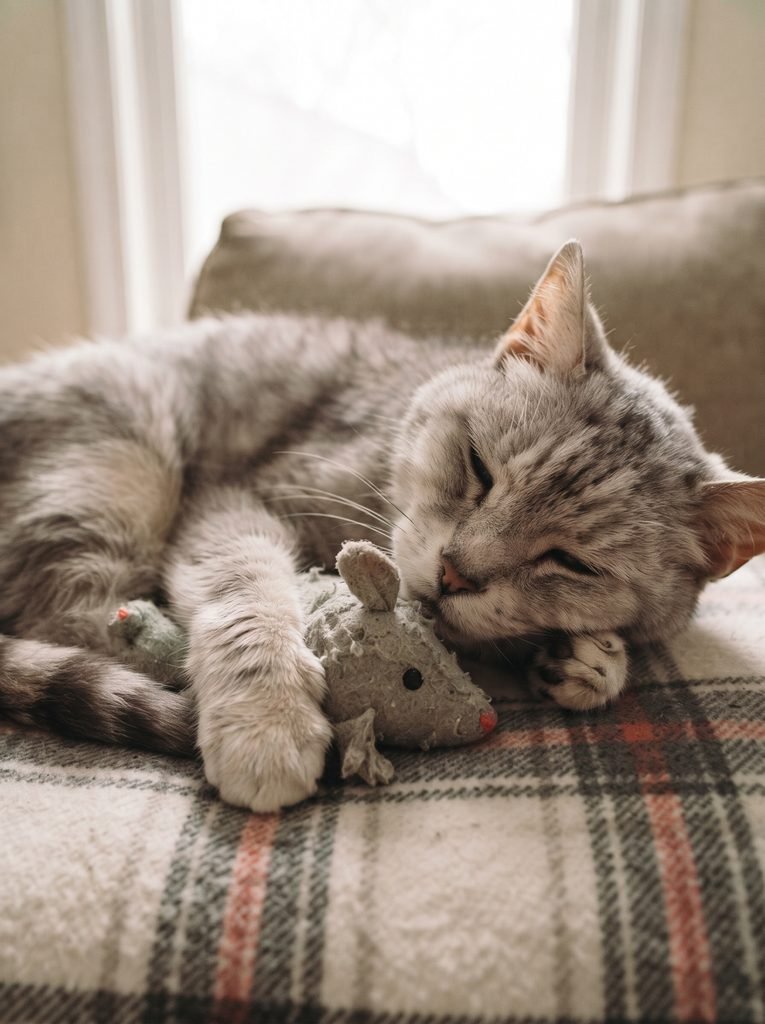
During his first week with us, Walter slept almost all the time. It wasn’t the casual nap of a cat lounging in a sunbeam; it was a deep, heavy rest, as if he had finally found a place where he didn’t have to stay on guard.
Every so often, he’d crack one eye open, check that we were still nearby, and drift right back off. He had no interest in exploring and asked for very little—just rest, and the relief of a home where nobody expected anything from him.
Week Two: Slow, Hopeful Steps
By the second week, small shifts started to appear. One morning while I was making breakfast in the kitchen, I heard a faint, steady sound behind me—tap, tap, tap—and turned around to see Walter standing in the doorway.
He had come to join me, crossing the room one careful step at a time with brief pauses to steady himself. When I set his bowl down, his tail gave the tiniest flick—a small sign, yet one that made us smile.
He was starting to tune back into the world around him. That morning, it hit me that Walter was no longer acting like a passing guest; he was beginning to feel at home.
Week Three: A Battered Mouse and a New Routine
Then came the surprise none of us saw coming. In the corner of the living room sat an old basket of toys left over from when our niece was younger, mostly untouched for years.
One afternoon, Walter slowly walked over, sniffed around, and pushed his nose between the forgotten toys. A moment later, he pulled out a small stuffed mouse—old, faded, missing half an ear, with worn fabric and a frayed tail.
It wasn’t much to look at, yet Walter picked it up gently in his mouth and carried it across the room like a prized treasure. Before long, it became part of his everyday rhythm, whether he was greeting us by the door with it or setting it down near our feet with a quiet look.
By the end of week three, he had a morning ritual around six o’clock. Instead of yowling or scratching at the door, he would rest a gentle paw on my hand, press his warm head into my palm, and sometimes leave his little stuffed mouse right beside me while waiting for breakfast with a slow, trusting blink.
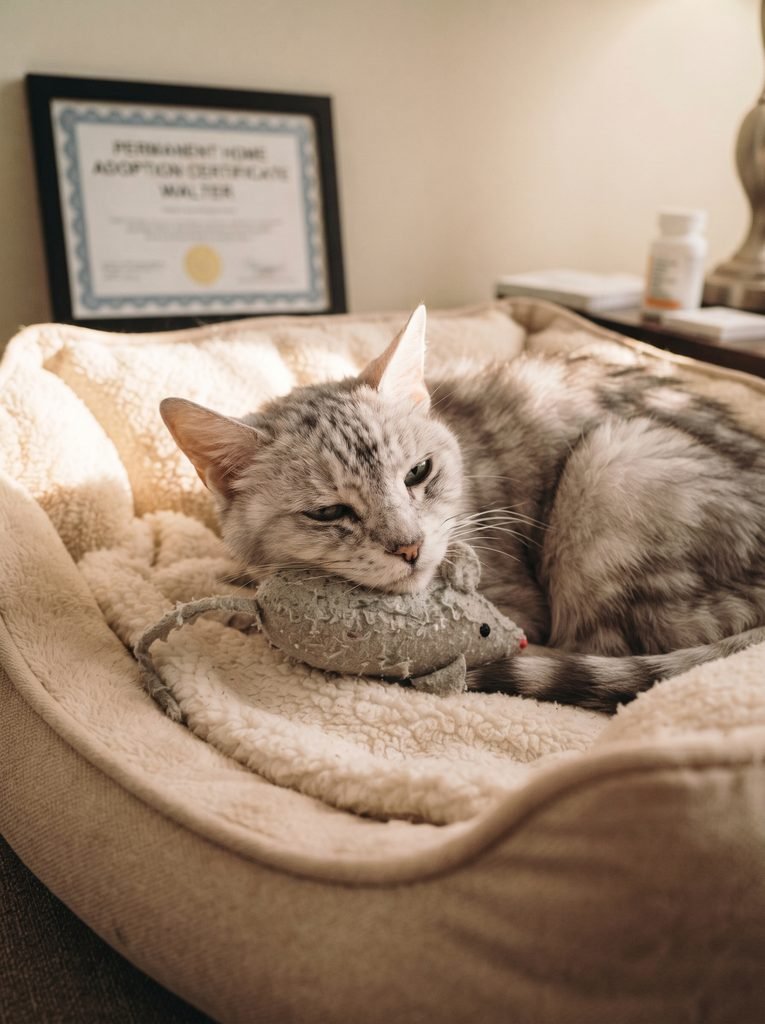
At night, he curled up in his orthopedic bed with that worn mouse tucked under his chin. Watching how much difference warmth, patience, steady routines, and senior cat wellness care made, it felt less like we were easing his final days and more like we were reminding him he still mattered.
When the Shelter Called About His Future
By then, Walter had settled right into the heart of our household. He had favorite napping spots, familiar routes down the hall, a knack for swiping a bite of chicken if your back was turned, and occasional brief bursts of speed before flopping dramatically onto a rug.
He was still fifteen, and his body reminded us of his age every day, yet he was genuinely enjoying himself. When the shelter called, I figured they were just checking in—until the coordinator asked to talk about Walter’s end-of-life plan.
My stomach dropped as I looked over at Walter peacefully asleep with his stuffed mouse. She explained that his placement had started as a hospice foster because of his age and initial condition, and asked if we had thought about making things permanent.
Before I could even speak, my wife looked at Walter and said, “We don’t want to plan his goodbye. We want to give him a home.” There was a brief pause on the line before the shelter worker softly replied, “That’s exactly what we were hoping you would say.”
She noted that while his progress was wonderful, he would still need ongoing preventative vet checkups and regular care for his age and mobility. A few days later, we brought him in for an exam and learned his condition could be managed—there was no reason to cut his story short just because of a label on a form.
Back home, Walter climbed slowly onto his favorite blanket on the couch, turned around twice, and settled in with his mouse. That night, we signed the adoption papers and crossed out HOSPICE FOSTER, replacing it with PERMANENT HOME.
A Forever Home Built on Small Moments
Today, Walter is still fifteen, taking stiff little steps, enjoying long naps, claiming the warmest spots in the house, and asking for breakfast before sunrise. His battered stuffed mouse still travels everywhere with him, untouched by any of the newer, softer toys we’ve tried to offer.
Whenever I see him carrying that little mouse down the hall, I think back to the day we brought him in expecting a farewell. Instead, he showed us how much life can still shine inside an older cat once someone stops expecting the worst and simply gives him a place to belong.
We may never know what Walter’s life looked like before he arrived, only what came after—a warm bed, gentle hands, and a home where nobody was waiting for him to disappear. Sometimes an animal doesn’t need someone to change the whole world; they just need one person willing to make their corner of it feel like home again.
If stories like this warm your heart, please subscribe to our Facebook page—together, we can help rescue, feed, and care for more cats in need.